Ernest Hemingway quotes on courage, resilience, and living fully — timeless lines from the master of spare, powerful prose.
July 31, 2026
·
3 min
Ernest Hemingway wrote the way he lived: directly, without decoration, and always closer to the bone than felt comfortable. An ambulance driver in the First World War, a foreign correspondent, and a fixture of 1920s Paris, he turned hard experience into a prose style that reshaped twentieth-century fiction.
He believed a writer's job was to set down one true sentence and then another, stripping away everything that was not earned. That same discipline runs through his views on courage, endurance, and what it means to live a full life.
1. “A man can be destroyed but not defeated.”
2. “The world breaks everyone, and afterwards many are strong at the broken places.”
3. “Courage is grace under pressure.”
4. “The world is a fine place and worth fighting for, and I hate very much to leave it.”
5. “In order to write about life, first you must live it.”
6. “The first and final thing you have to do in this world is to last it and not be smashed by it.”
7. “Every man's life ends the same way. It is only the details of how he lived and how he died that distinguish one man from another.”
8. “Write hard and clear about what hurts.”
9. “A writer should write what he has to say and not speak it.”
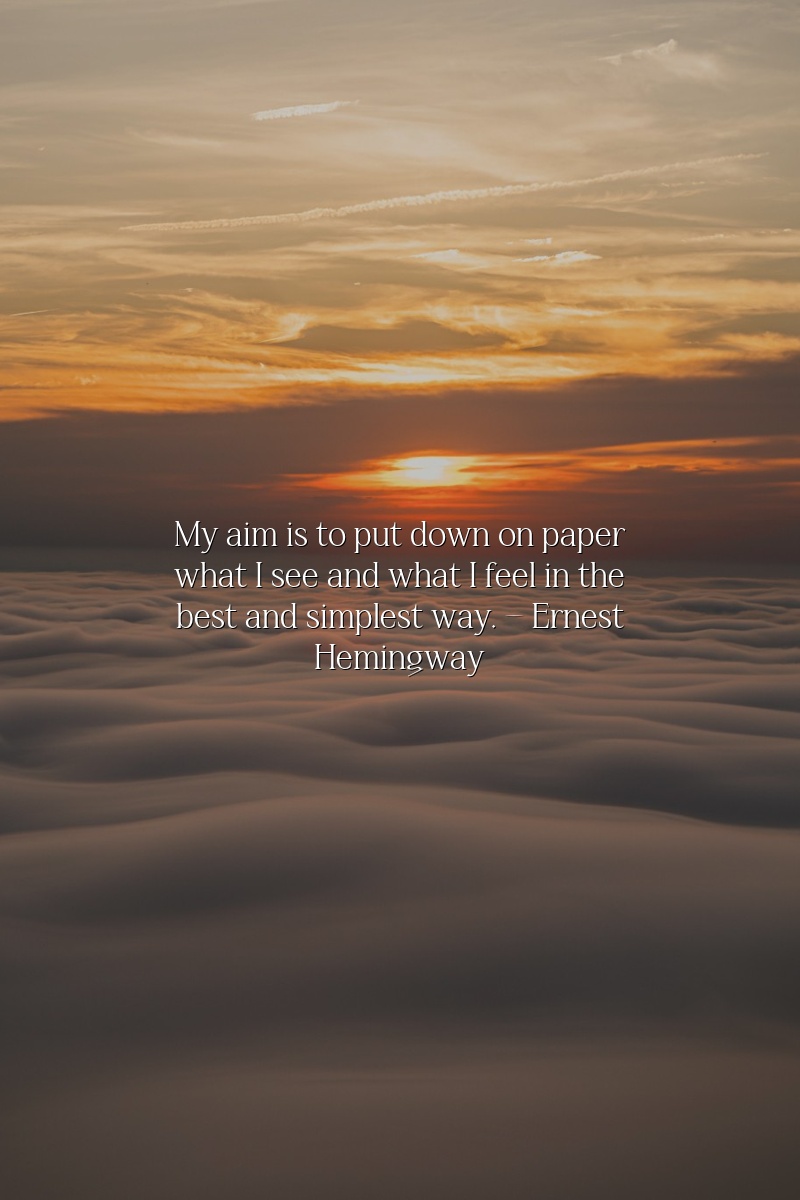
10. “My aim is to put down on paper what I see and what I feel in the best and simplest way.”
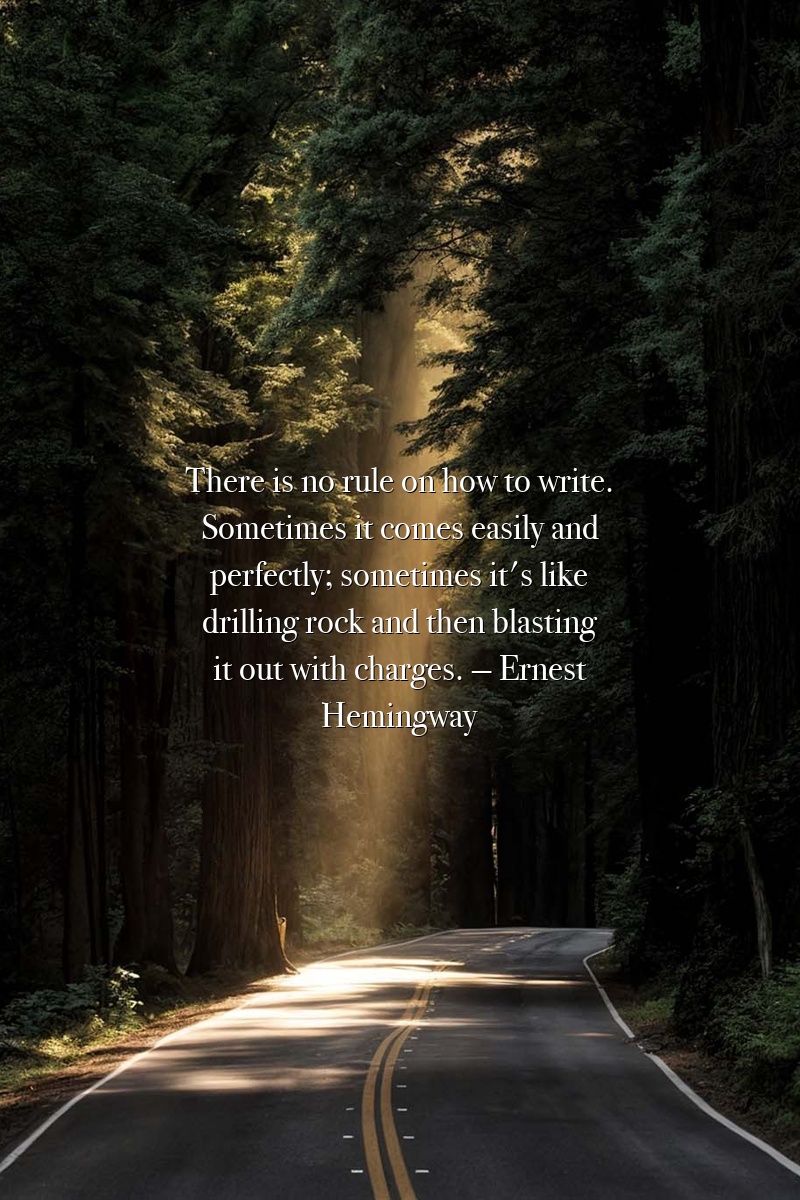
11. “There is no rule on how to write. Sometimes it comes easily and perfectly; sometimes it's like drilling rock and then blasting it out with charges.”
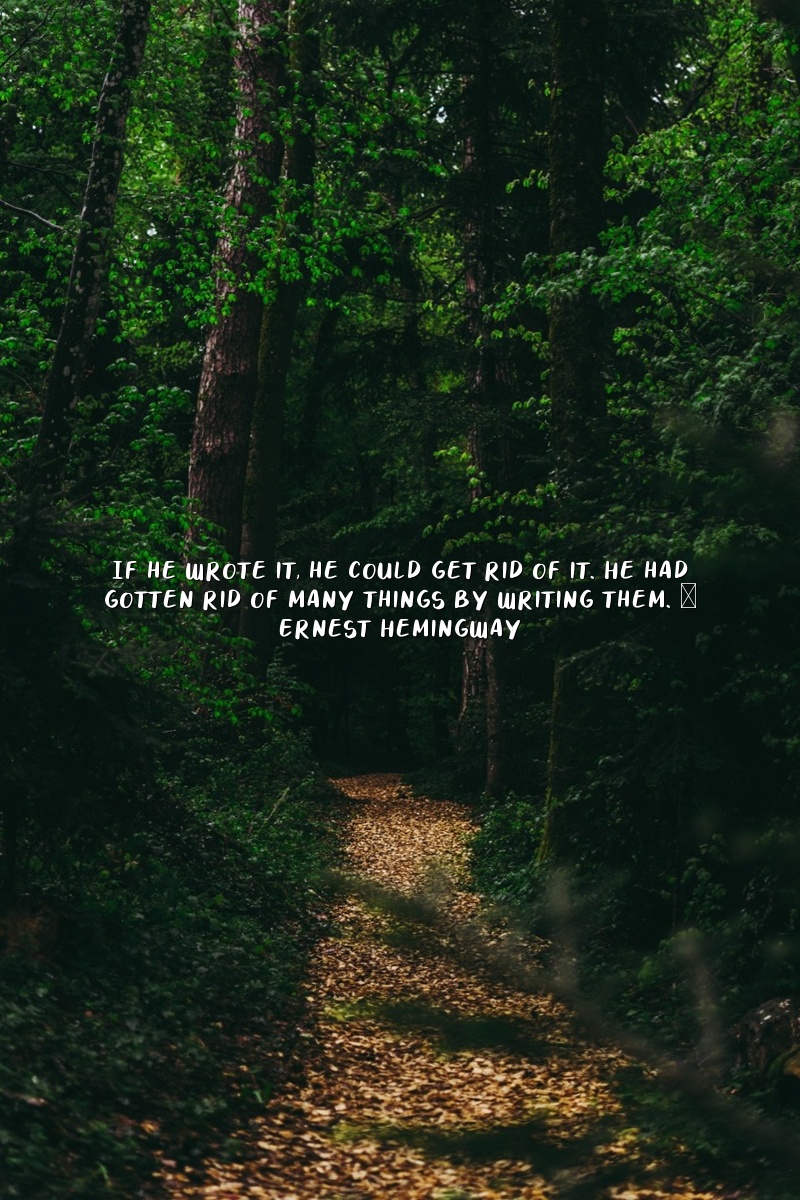
12. “If he wrote it, he could get rid of it. He had gotten rid of many things by writing them.”
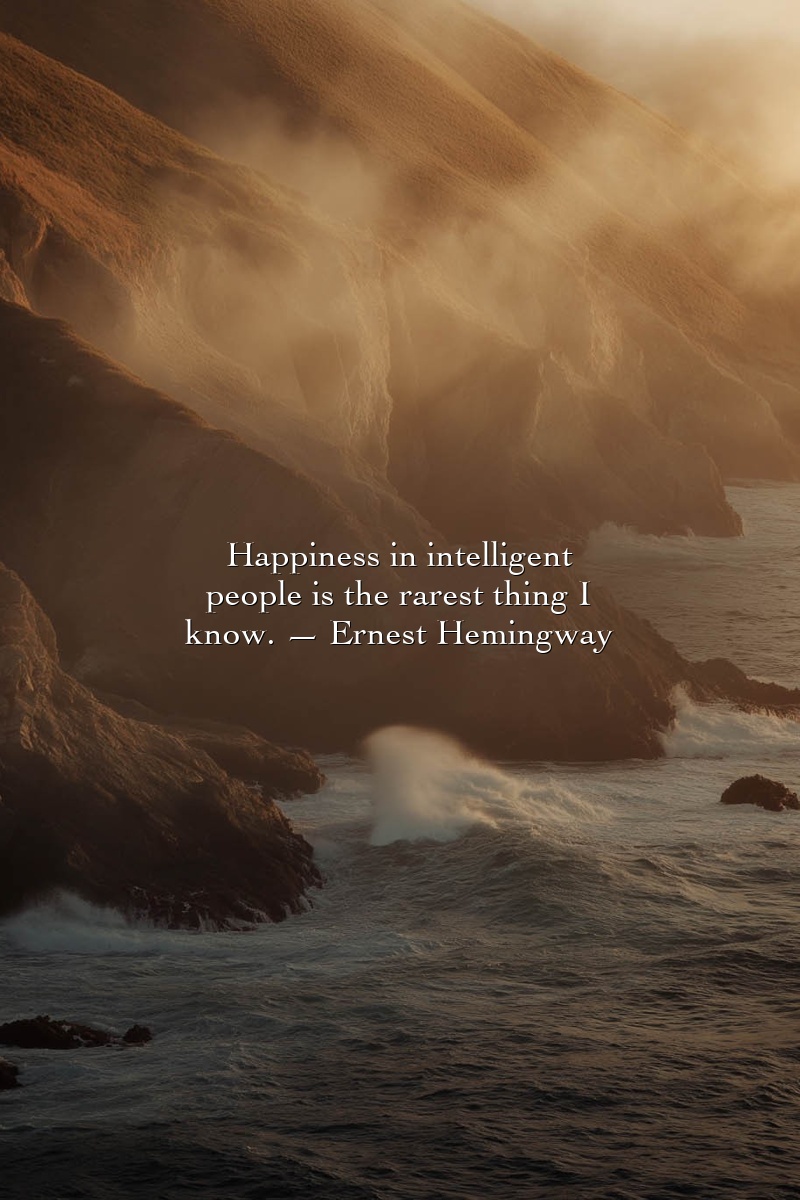
13. “Happiness in intelligent people is the rarest thing I know.”
14. “All things truly wicked start from innocence.”
Hemingway's characters are often beaten but rarely broken, and his most enduring lines carry the same conviction: the world wounds everyone, yet many people grow stronger in the wounded places. Endurance, for him, was its own kind of victory.
His thoughts on writing are quoted as often as his thoughts on life, and for the same reason. Both insist on honesty, simplicity, and the courage to face what hurts and put it down plainly.
Hemingway is best known for novels such as The Sun Also Rises, A Farewell to Arms, and For Whom the Bell Tolls, along with the novella The Old Man and the Sea. He won the Pulitzer Prize in 1953 and the Nobel Prize in Literature in 1954.
What was Hemingway's writing style?
He is famous for spare, economical prose built from short, declarative sentences, an approach often called the “iceberg theory,” in which most of a story's meaning stays beneath the surface. It made him one of the most imitated writers of the century.
What does “grace under pressure” mean?
It was Hemingway's own definition of courage: the ability to stay composed and dignified in the face of danger or hardship. He used the phrase in the 1920s, and it became one of his most quoted ideas.
Are these Hemingway quotes accurate?
The lines here are drawn from his published novels, stories, letters, and his Nobel remarks. Like any famous author, Hemingway is frequently misquoted online, so these were checked against his documented work.